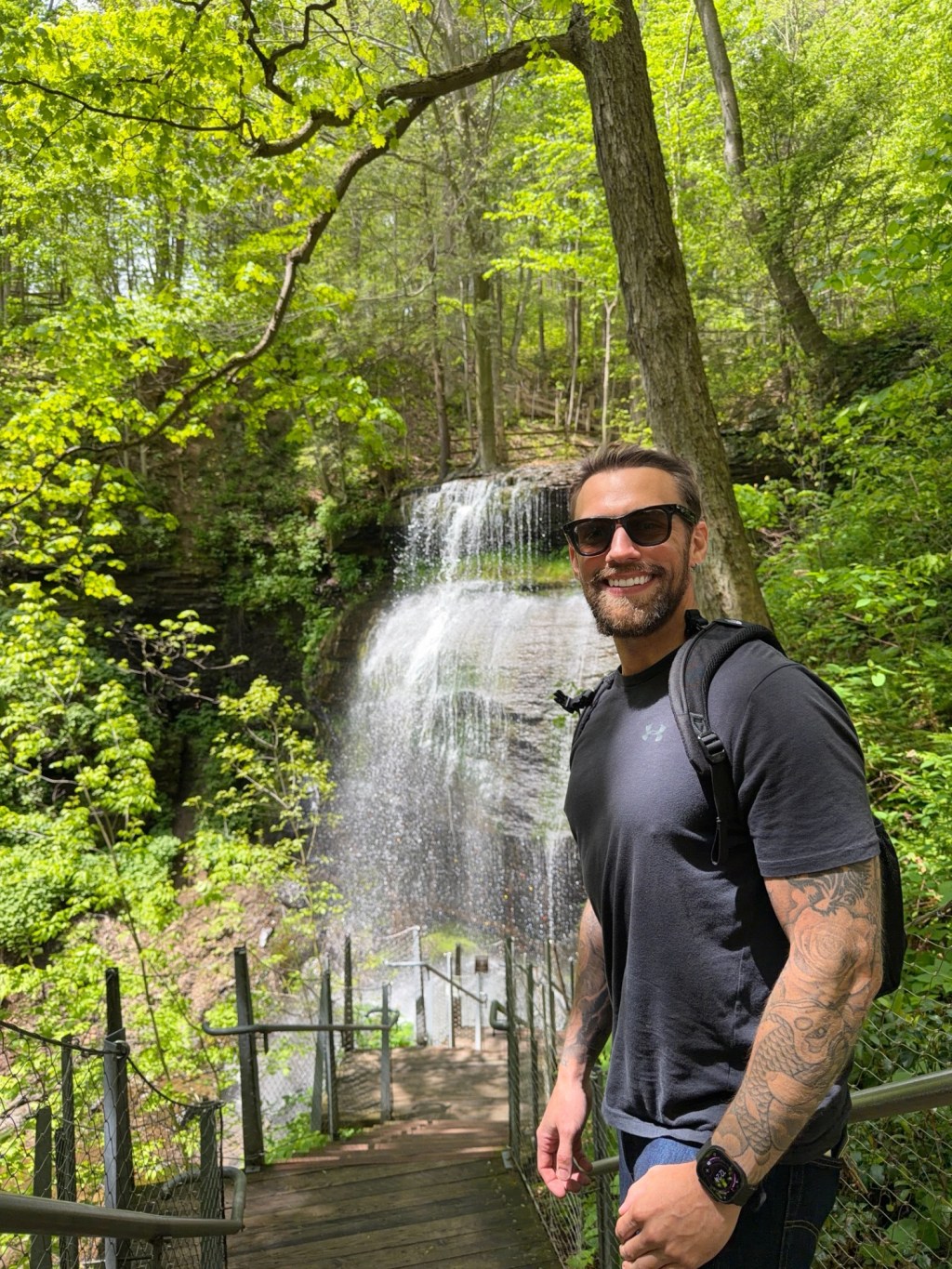
My Pennsylvania Bucket List tour brought me to stop number #19 at Buttermilk Falls Natural Area in Indiana County, a 48 acre woodland site near Clyde with one of the most meaningful waterfalls I have visited so far. At first glance, it is easy to come here for the 45 foot waterfall, the short walking path, and the chance to stand behind the falling water. But the deeper story of this place reaches beyond the rocks and the creek. From 1931 to 1956, this land belonged to Fred McFeely, the grandfather of Fred Rogers, who used the property as a family retreat with a cottage, stables, outbuildings, and a swimming area above the falls. Rogers often visited here as a child, walking these grounds long before he became one of the most beloved figures in American television. Today, the stone foundations and retaining walls still remain, turning Buttermilk Falls into something more than just a scenic stop. It feels like a walk through a piece of Pennsylvania nature, family memory, and the early landscape that helped shape the gentle imagination of Mr. Rogers.
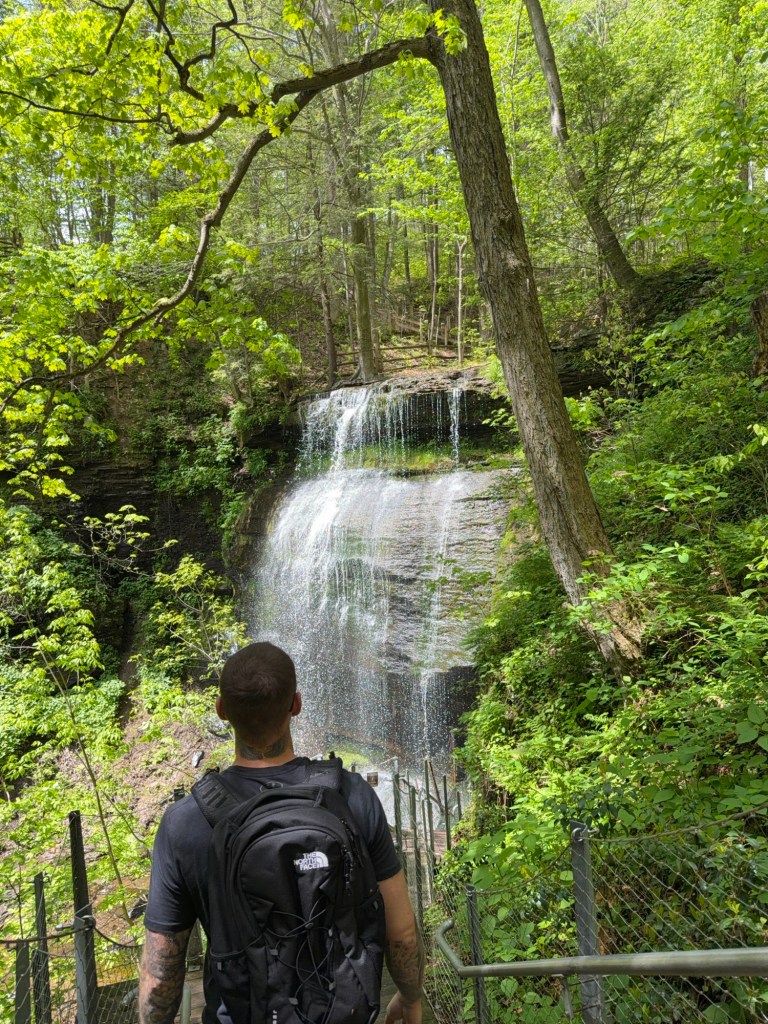
Standing at Buttermilk Falls, looking at the same landscape that once belonged to Fred Rogers’ grandfather and helped shape a small piece of Mr. Rogers’ childhood imagination.
Overview and History of Buttermilk Falls
Buttermilk Falls has a history rooted in both geology and preservation. The waterfall flows over layers of rock that create its distinct drop, giving visitors one of the more striking waterfall views in western Pennsylvania. The surrounding woods, creek, and stone remnants give the area a feeling that is part natural landmark and part historical trace.
During the McFeely family’s ownership, the property was more than just a scenic retreat. It included a cottage, stables, outbuildings, and a swimming area above the falls, making it a place where family life and the landscape were closely connected. Those remaining stone foundations still give visitors a glimpse into what once stood there.
After the land was donated to Indiana County Parks in 1995, Buttermilk Falls was preserved for public use rather than private ownership. That shift is part of what makes the site meaningful today. A place once held by one family is now open to anyone willing to walk the trail, hear the water, and notice how much history can remain in a small piece of Pennsylvania woods.
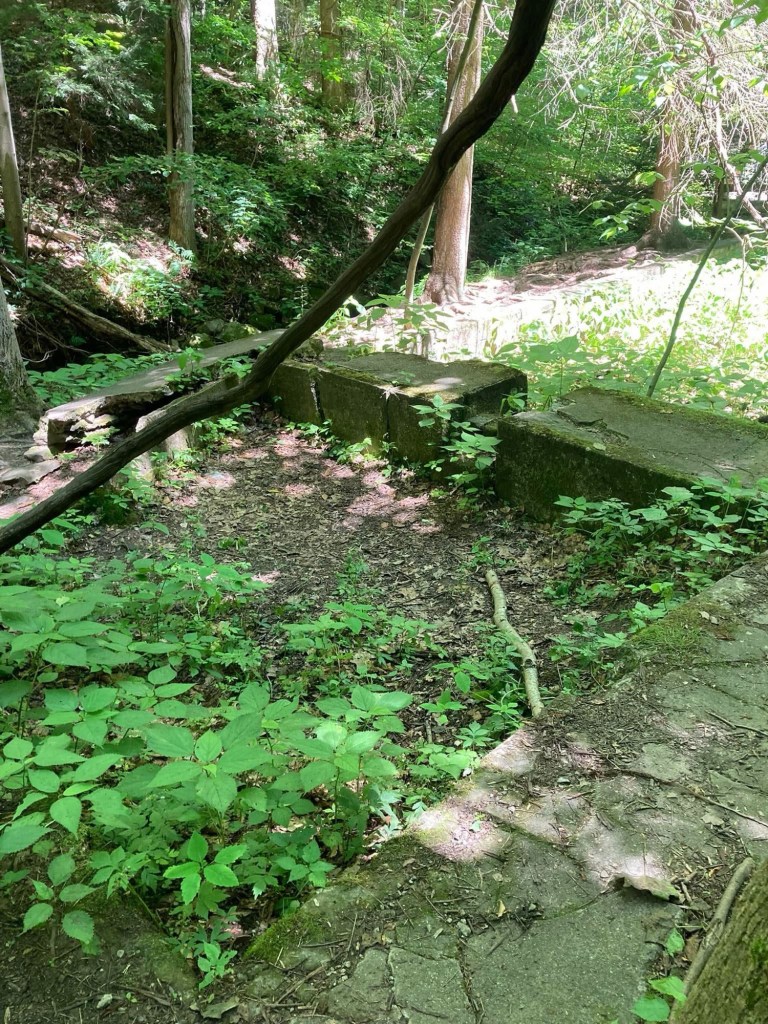
Stone remnants from the McFeely family retreat still sit in the woods at Buttermilk Falls, giving the natural area a quiet link to its past.
Mr. Rogers’ Pathway
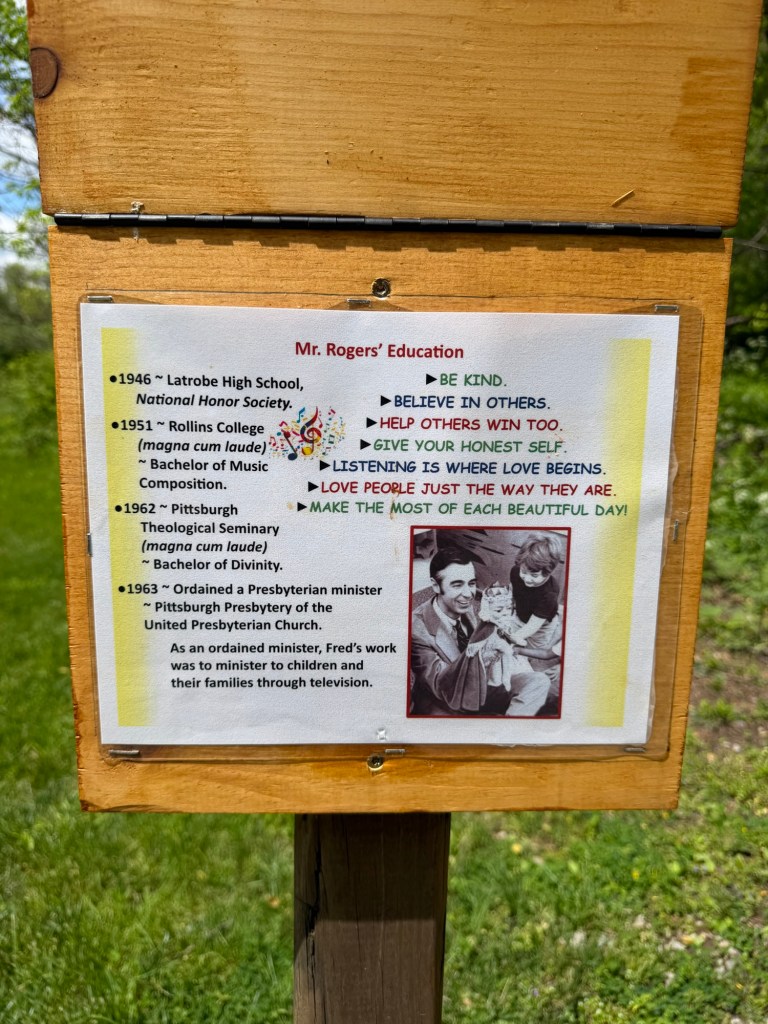
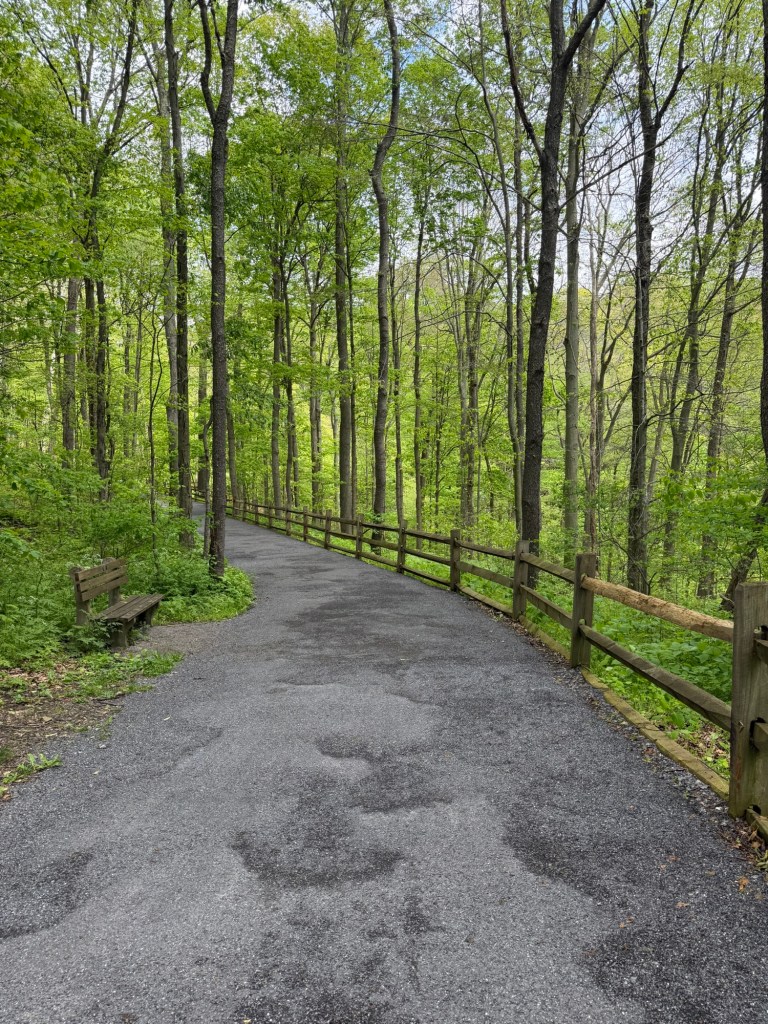
The Mr. Rogers’ Pathway is the part of Buttermilk Falls that gives the visit its deeper meaning. The trail does not feel long or difficult, but it carries you through a landscape tied to Fred Rogers’ childhood and the McFeely family retreat that once stood here. As you walk through the woods, past the old stone remnants and toward the sound of the falls, the place starts to feel less like a simple nature stop and more like a memory preserved in the trees. There is something fitting about that connection. Mr. Rogers built much of his life’s work around patience, imagination, kindness, and seeing value in ordinary moments. Walking this path, it is easy to understand how a place like this could leave an impression on a child. The waterfall is the main attraction, but the pathway is what gives the site its emotional weight. It turns the visit into a small walk through Pennsylvania history, family memory, and the early world of a man who later helped generations of children feel seen.
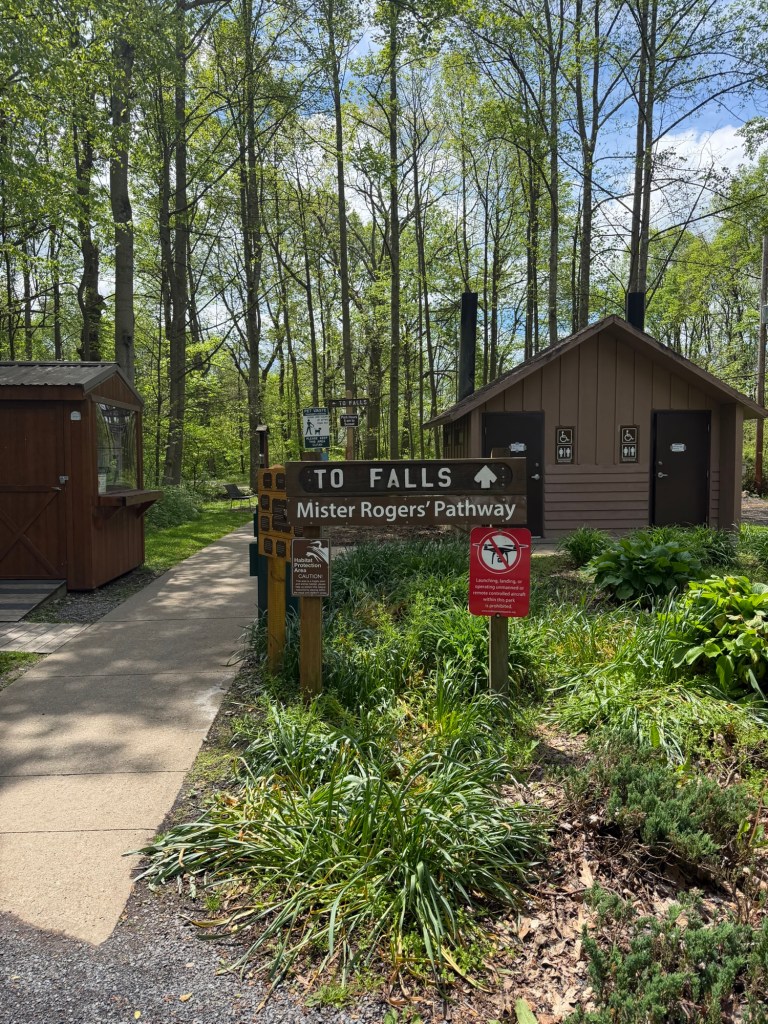
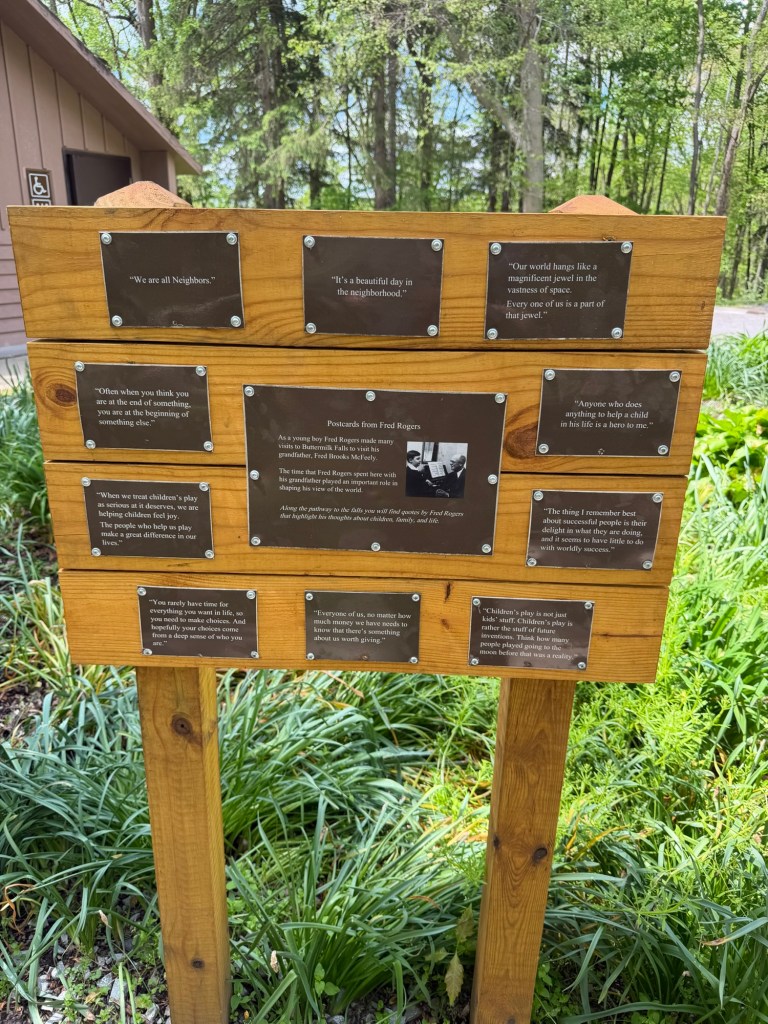
The Mr. Rogers’ Pathway at Buttermilk Falls features quotes and memories that connect the natural area to Fred Rogers’ childhood visits here.
The Solar Bridge
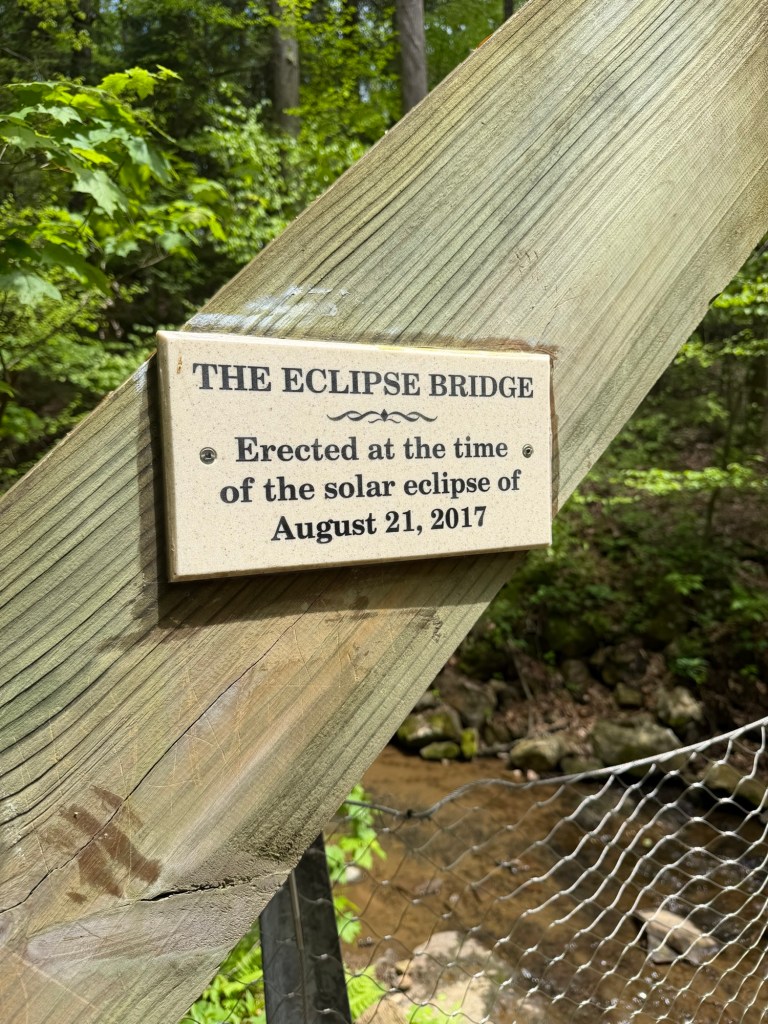
One of the more interesting modern additions at Buttermilk Falls is the solar bridge near the trail system. It gives the park a small but fitting connection between conservation and technology, using solar energy in a place already centered around preservation. I liked that detail because it keeps the site from feeling frozen in the past. Buttermilk Falls carries the history of the McFeely family and Fred Rogers, but it also shows how public spaces can keep evolving in thoughtful ways. The bridge adds something practical to the visit while quietly reinforcing the larger message of the park: protect the land, respect the past, and find better ways to move through natural places without taking more from them than we need.
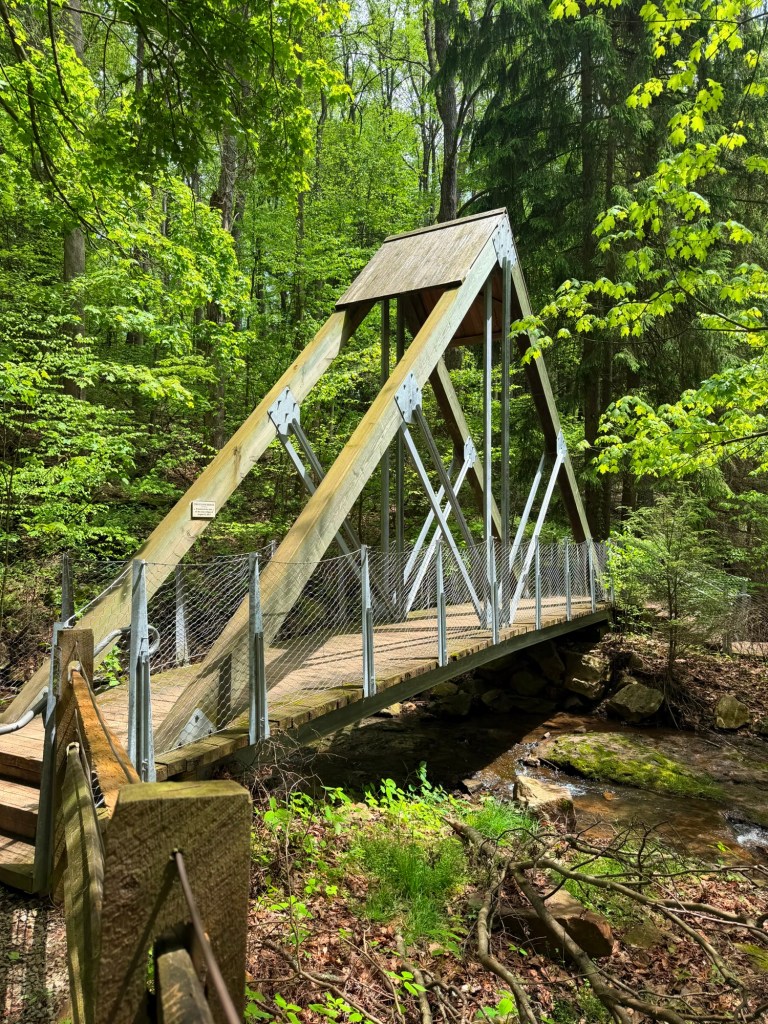
The solar bridge at Buttermilk Falls adds a modern touch to a trail shaped by nature, preservation, and history.
The Waterfall
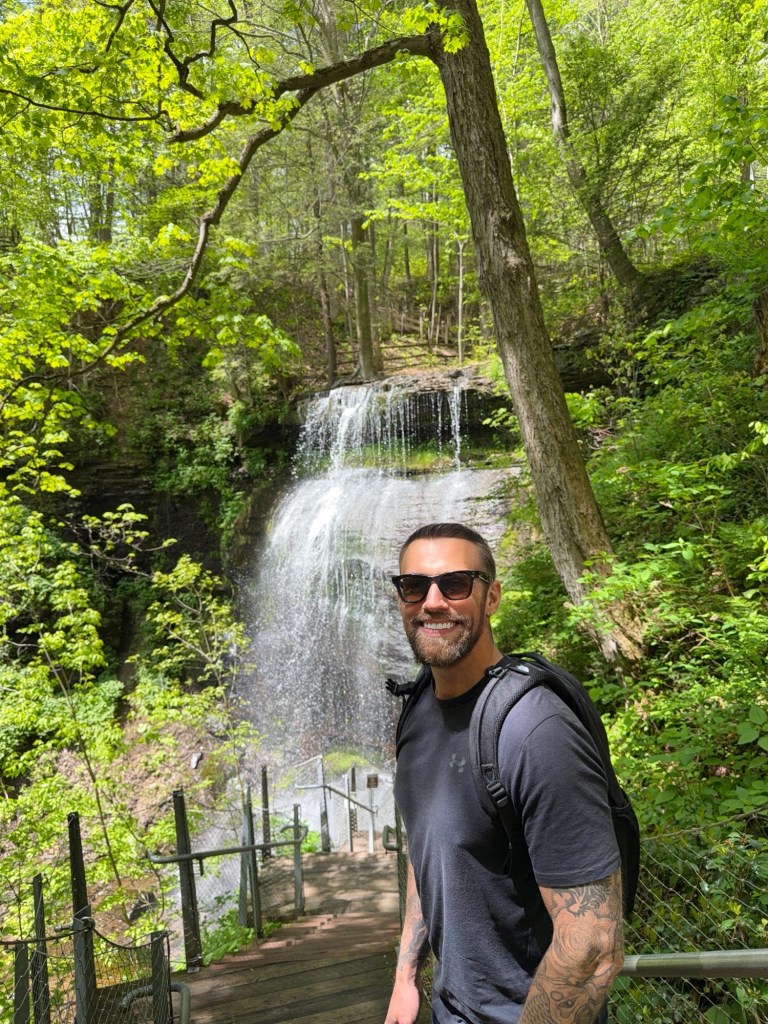
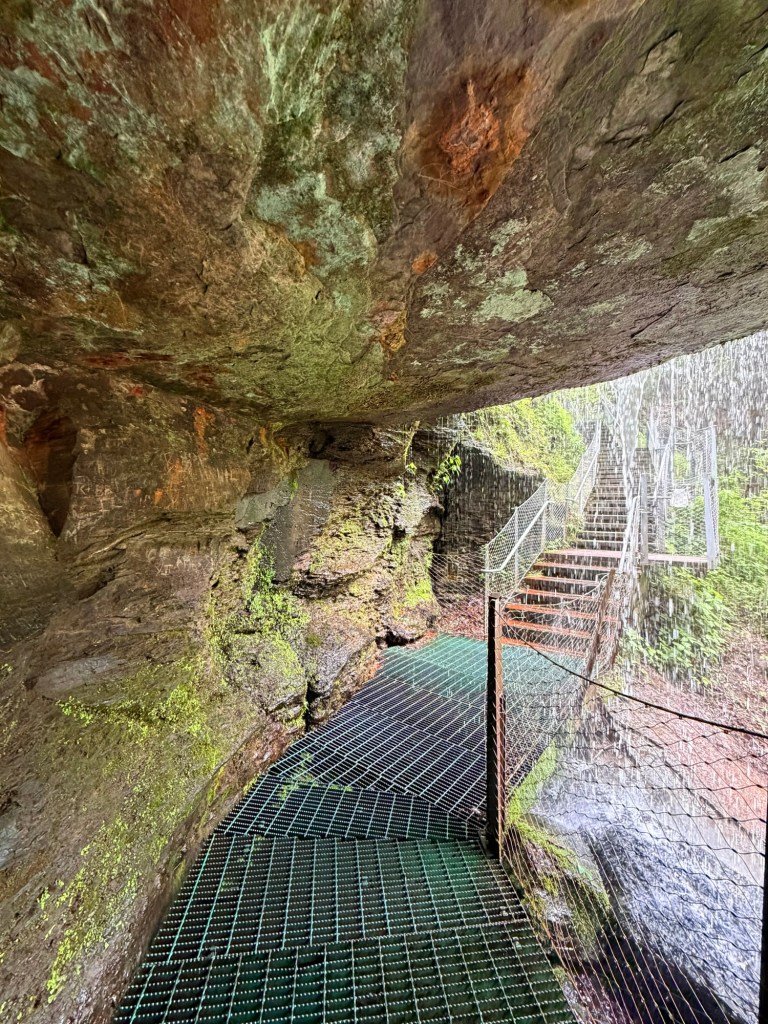
The waterfall is the centerpiece of Buttermilk Falls and the reason most people come here in the first place. Water drops roughly 45 feet over the layered rock, spreading into thin white sheets as it falls into the shaded gorge below. What makes it especially memorable is how close the trail lets you get. You can view it from above, follow the steps down toward the base, and even walk behind the falling water for a different perspective. That part of the visit makes the falls feel more immersive than a simple overlook. You are not just standing back and looking at it. You are hearing it, feeling the cool air around it, and seeing the rock wall from inside the space the water has carved over time. Combined with the surrounding forest, the old stone remnants, and the Mr. Rogers connection, the waterfall gives Buttermilk Falls its strongest sense of place.
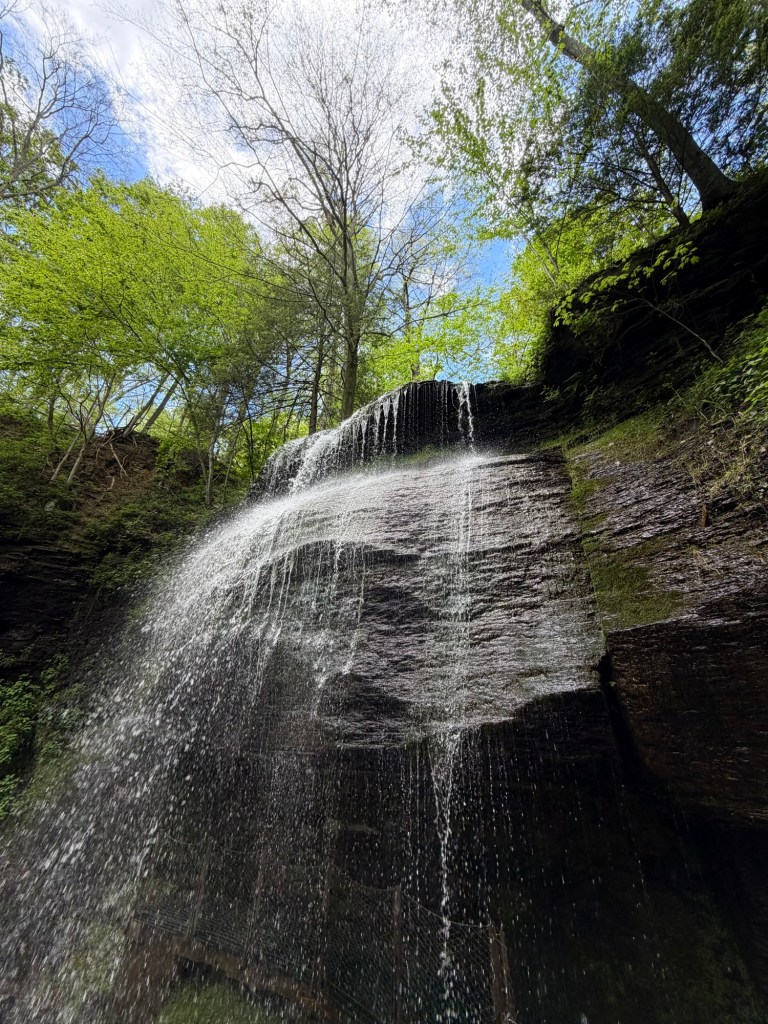
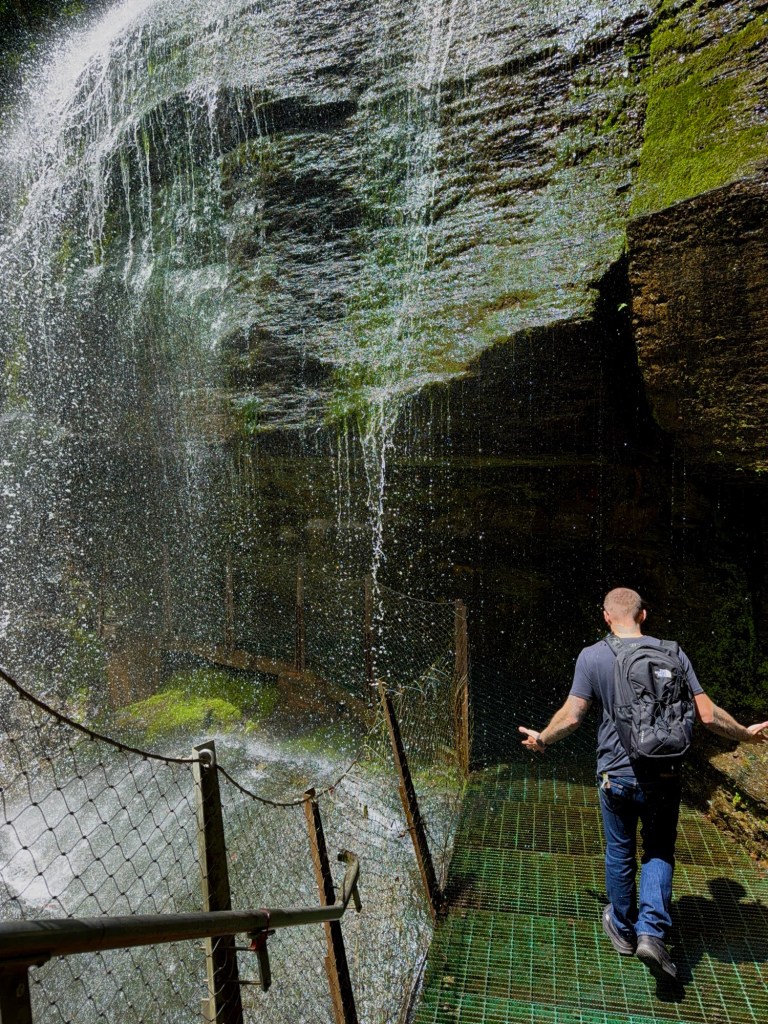
Fun fact: Buttermilk Falls is one of the few waterfalls in Pennsylvania where visitors can actually walk behind the falling water, giving you a view from inside the rock ledge instead of only from the trail below.
Buttermilk Falls ended up being more than just another waterfall stop on my Pennsylvania Bucket List tour. It had the scenery I was hoping for, but the history gave this location more meaning and made it something I’ll always take with me. Between the old McFeely family remnants, the Mr. Rogers’ Pathway, the solar bridge, and the chance to stand so close to the falls itself, the whole area felt like a blend of nature, memory, and preservation.
You can walk the trail, see the waterfall, read the quotes, notice the ruins, and leave with a better understanding of why certain landscapes matter. Buttermilk Falls is beautiful on its own, but its connection to Fred Rogers adds something personal and lasting. It is a reminder that places do not have to be massive or famous to leave an impression. Sometimes a short walk through the woods can carry more history, imagination, and humanity than you expect.


Leave a comment