Almost every regret you carry can be traced back to a single moment in time.
A moment of haste. A flare of emotion. A decision made too quickly, or a sentence spoken before your mind had fully caught up with your words.
If you replay those moments honestly, you can usually feel what was missing right before things went wrong. You likely had the information. You probably even knew better, at least on some level.
What you didn’t have was composure, that small pocket of silence where you slow down, breathe, and actually choose your next move instead of being pulled along by your primitive impulses.
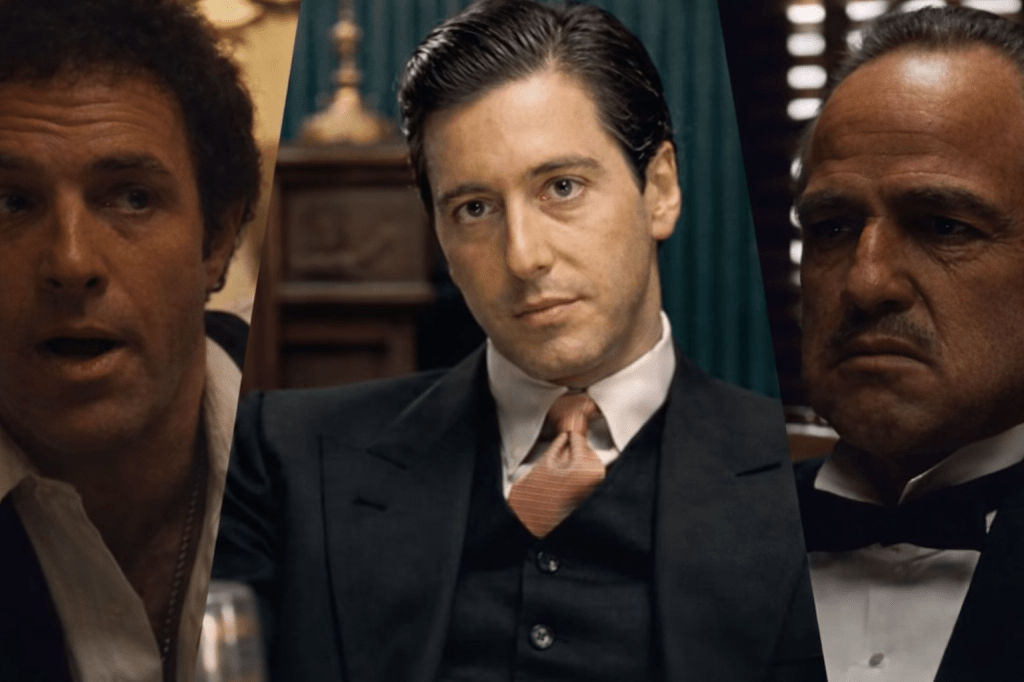
I recently finished The Godfather novel and watched all three films. What caught my attention wasn’t just the violence or the betrayals, as compelling as those were, but the way Vito and Michael carried themselves beneath all of it. I found myself paying closer attention to how they sat with information, how they watched, how they listened, and quietly plotted before making a move. There was something almost masterful about the art in which they schemed in silence, letting situations unfold while they calculated several steps ahead. It wasn’t just what they did that made them powerful, but how they moved while deciding what to do.
Silence in Speech
Think about the first time we really meet Vito Corleone as Don.
At his daughters wedding, an entire celebration filled with noise, dancing, clinking glasses, and competing agendas, yet Vito sits almost apart from it all. Surrounded by laughter and chaos, he hears everyone’s requests, listens carefully as people lean in to speak with him, and never rushes a response. You see this again and again in how he absorbs information before acting: patrons come into his office seeking favors, and Vito, composed and unhurried, lets them talk, letting their words and intentions reveal themselves before he makes a choice. Where others are swept up in social frenzy, Vito watches, calculates, and retains full control of his presence in the room. What could have been just another lively scene becomes, in his hands, a demonstration of strategic silence, an ability to sit with incoming data, weigh it internally, and respond only when he has fully chosen how and whether to engage. It’s in these quiet observations, these almost imperceptible moments of inward reflection, that you begin to see how deliberate, patient silence becomes a kind of power in its own right.
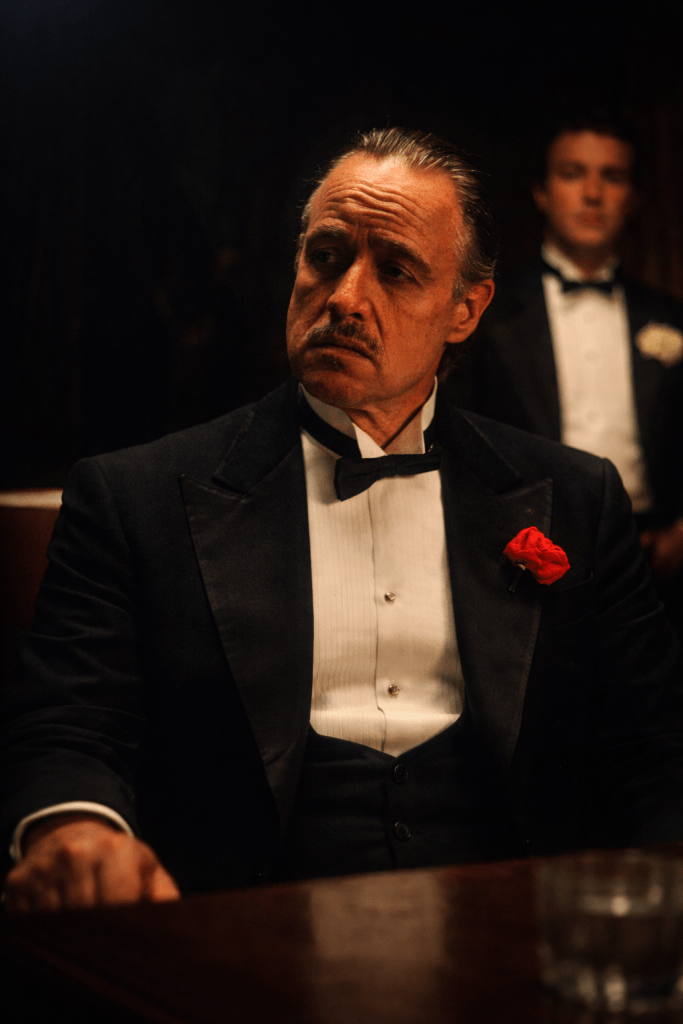
You see a similar dynamic in the hospital scene after the assassination attempt. Very little is spoken, but so much is communicated. Michael realizes in that silence how vulnerable his father is, and how dangerous the world around him has become. He isn’t given a lecture, he absorbs the reality through quiet observation.
Later, when Michael fully steps into power, his relationship with silence becomes even sharper.
They say that the eyes are the window into the soul. Michael Corleone was a man of few words. It’s not Michaels words that define his character, its the looks that he gives you. Michael doesnt glance – he stares unlike most people, who would look away out of embarassment. When his eyes are on you, you will feel it. He isn’t looking at you, hes looking into you; looking at what you dont want him to find. He reads you. Throughout the films – we see him increasingly aware of his surroundings, inspecting people up close. The Godfather Part 1 was about the shift of power from Vito to Michael after the aasassination attempt on his father. In The Godfather Part II we see Michael – though not openly charasmatic, for a man who is easy to understand – is a man who is easy to defeat. He only speaks behind closed doors for the few that need to hear it, but his presence is felt in any room he walks into, inspring fear in those close to him and those who have never met him.
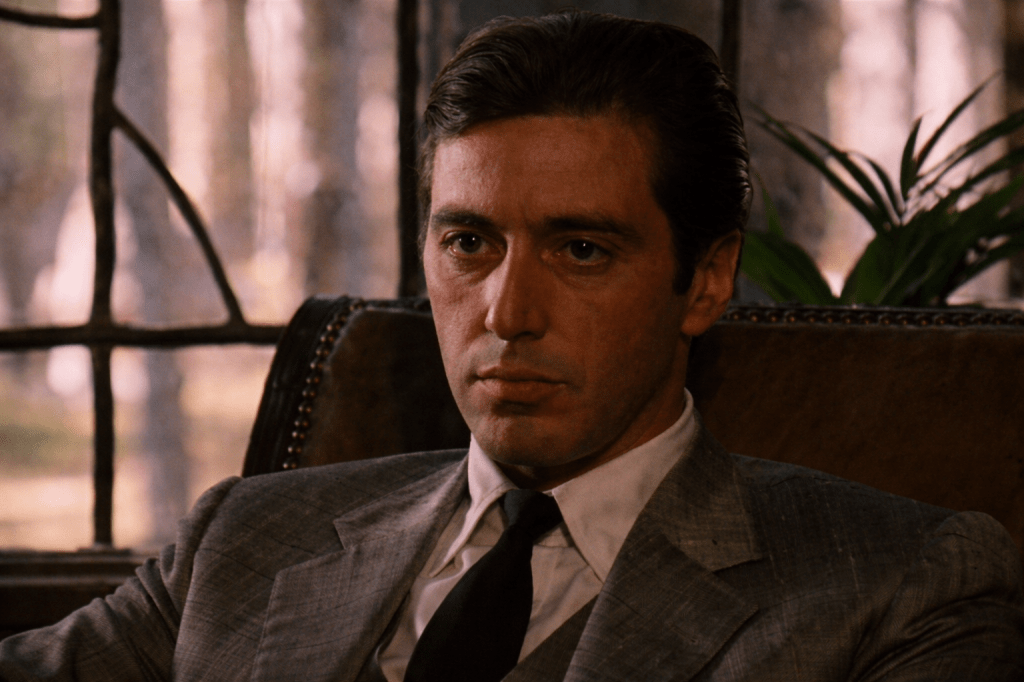
We tend to think communication lives entirely in words, but that’s not really how it works. A huge part of it lives in the pauses, communication through his eyes and what is not said.
Most people rush to fill quiet moments because they feel awkward or anxious. But that discomfort belongs to the speaker, not the listener. When you pause, you subtly shift the psychological weight onto others. People lean in. They pay closer attention.
Vito and Michael never seemed desperate to be heard. That’s why people listened.
Silence, Strategy, and the 48 Laws of Power
Reading The Godfather alongside The 48 Laws of Power makes this even clearer. Vito and Michael embody some of Greene’s most brutal and effective principles, especially Law 3: Conceal Your Intentions and Law 4: Always Say Less Than Necessary.
Greene’s logic is straightforward: if people don’t know what you truly want, they can’t anticipate your moves. If they can’t read you, they can’t control you. Every extra word you speak gives others more data about how you think and what you’re planning.
Vito practices this instinctively long before anyone ever labeled it a “law.”
At the wedding, people reveal themselves to him constantly – their fears, their ambitions, their weaknesses. Vito gives almost nothing back. He asks a few gentle questions, listens deeply, and responds sparingly. By saying less, he learns more. By concealing his inner thoughts, he keeps the upper hand without ever seeming manipulative.
You see this again with Sollozzo. Vito listens calmly to the proposal to enter the drug trade. He doesn’t lecture. He doesn’t explode. He doesn’t tip his emotional hand. He simply declines in a measured, dignified way. On the surface, it looks like restraint. Beneath it, it’s power. He has already decided the direction of the family, but he reveals only what is necessary.
Michael takes this to another level.
Law 3: Conceal Your Intentions
This law is written across his entire transformation. When he tells Kay, “That’s my family, Kay, it’s not me,” he is already concealing something much darker: the fact that he is becoming exactly who he claims he isn’t.
The restaurant scene is perhaps the purest example of this law in action. Michael says almost nothing. He doesn’t argue. He doesn’t posture. He gives away zero indication of what he’s about to do. His silence becomes a perfect mask, so effective that both Sollozzo and McCluskey underestimate him completely. They never see the hit coming because Michael never let them.
Michael’s decision to take Carlo’s and Connie’s son as his godson is one of his most calculated acts of deception in The Godfather. On the surface, it appears to be an olive branch, an act of reconciliation meant to heal the rift caused by Sonny’s murder and years of family tension. By publicly embracing Carlo in this sacred role, Michael performs warmth, legitimacy, and forgiveness, all while deepening Carlo’s emotional and religious bond to him. Yet this gesture is entirely strategic. Michael has long suspected Carlo’s complicity in setting up his brother, Sonny, recognizing early on that his brother’s impulsive protection of Connie was precisely the leverage their enemies would exploit. Instead of confronting Carlo or revealing his suspicions, Michael patiently conceals his knowledge, allowing Carlo to believe he has gotten away with his betrayal.
This is concealment at its most surgical. Michael weaponizes appearances family, faith, and a ritual – to lull Carlo into a false sense of security, ensuring he grows careless. Only when the moment is perfectly calibrated does Michael spring the trap, inviting Carlo to confess under the pretense of protection and trust. In that final confrontation, Carlo’s own words implicate him, confirming that he worked with Barzini to expose Sonny to assassination. Michael’s brilliance lies not in discovering the truth he already knew, but in waiting, shaping circumstances, and controlling timing so that Carlo’s fate feels both inevitable and self incriminating.
The godfather baptism thus becomes a masterclass in Concealing Your Intentions: Michael hides his true purpose beneath piety and family unity, giving away nothing while gathering everything. His silence, patience, and theatrical benevolence disarm Carlo completely, proving Greene’s point that power often moves most decisively behind a veil only revealing itself when it is already too late to escape.
Concealing your intentions isn’t about being dishonest or manipulative, but about cultivating discipline, patience, and strategic restraint in how you move through the world. In business, your career, and even your personal life, it means resisting the urge to announce every plan, react to every provocation, or reveal your hand before the right moment. When you speak less and observe more, you gain clarity, leverage, and the space to think several steps ahead rather than being carried by impulse. By learning to sit with information, refine your goals quietly, and let your results speak for you, you position yourself to act from strength rather than vulnerability, moving deliberately, protecting your interests, and ultimately giving yourself the best chance to shape outcomes on your own terms.
Law 4: Always Say Less Than Necessary
Greene argues that the more you talk, the more likely you are to sound ordinary, insecure, or out of control. Words can betray you. Silence rarely does.
In The Godfather Part II, during the Senate hearings, Michael speaks with surgical economy. He never rambles. He never over explains. His answers are short, precise, and controlled. He reveals only what he absolutely must. Even under public attack, his silence gives him an aura of authority.
Compare that to Fredo, who talks too much, confides too freely, and ultimately exposes his own weakness. Fredo’s tragedy is, in part, a failure to respect the power of silence.
Vito follows the same principle, but with more warmth. He rarely lectures or grandstands. When he says, “I’m gonna make him an offer he can’t refuse,” the power isn’t in volume, it’s in brevity. The fewer words he uses, the heavier they become.
What both men understand is simple: silence is a form of strategic presence.
Saying less than necessary is ultimately a practice in control over your words, your emotions, and how you are perceived. In business, your career, and everyday life, it encourages you to be intentional rather than reactive, to listen more than you speak, and to let silence do some of the work for you. When you resist the urge to fill every space with commentary or explanation, you protect your energy, preserve your leverage, and avoid giving others more information than they’ve earned. Speaking sparingly forces you to think more clearly, choose your words with care, and communicate with purpose rather than habit. Over time, this discipline builds credibility and presence, allowing you to move through the world with quiet confidence where your words carry weight, your boundaries are respected, and your actions, not your chatter, define who you are.
Silence in Decision Making
Where silence becomes even more decisive is in how it shapes choices.
Michael’s arc across the trilogy is, in many ways, a meditation on stillness, and what happens when a man perfects it, then slowly hardens inside of it.
Unlike Sonny, who reacts immediately and emotionally, Michael almost always steps back before acting. He removes himself from the noise, the pressure, the chaos, and thinks.
The baptism montage in Part I is one of the clearest examples of this. On the surface, it’s about violence, but underneath, it’s about patience. Michael didn’t wake up that morning and suddenly decide to wipe out his enemies. That plan was built in silence, long before the church bells ever rang.
In Part II, you see this even more clearly. During the Senate hearings, Michael remains composed while being publicly attacked. He doesn’t explode. He doesn’t perform outrage. He absorbs, deflects, and moves deliberately.
Contrast that with Sonny.
Sonny has real power. Physical, emotional, and charismatic, but he’s ruled by his feelings. When he hears about his sister’s domestic abuse with Carlo, he doesn’t pause. He storms out, driven by rage. That predictability is exactly what gets him killed on the causeway. His downfall is a failure to practice silence.
Vito, again, sits between his sons.
He feels deeply, you see it in his tenderness with his family; but he never lets emotion hijack him. Even when his pride is wounded or his authority is challenged, he stays composed. His silence isn’t cold. It’s disciplined.
In the young Vito storyline in Part II, his rise to power is built quietly. He doesn’t seek attention or brag about what he’s doing. He removes threats methodically and only when the time is right. His strength comes from patience, not spectacle.
Regret, Haste, and the Human Cost
This is where the story stops being just about fictional mob bosses and starts to feel uncomfortably relevant.
So many of our own regrets in relationships, careers, friendships come from moments when we acted too quickly or spoke without thinking. A heated text sent in anger. A confrontation driven by pride. A decision made out of fear instead of clarity.
In almost every case, if we had simply paused even for a few seconds – the outcome might have been different.
Silence creates a gap between what you feel in the moment and what’s actually happening. In that gap, you get the chance to think instead of just react. That’s where better decisions come from.
Michael embodies this instinctively. His silence can look like hesitation, but it clearly isn’t. It’s a disciplined refusal to move until the picture is clear. By the time he acts, he has already played out multiple scenarios in his head, like a chess player studying the board before making a move.
Most of us, if we’re honest, move more like Sonny.
Confidence and Conviction
What makes Michael so compelling and at times terrifying – is that his confidence doesn’t depend on anyone else.
He doesn’t need applause. He doesn’t need reassurance. His certainty is internal, forged in solitude and silence. That’s why he can make devastating decisions without flinching. The conviction was built long before the moment ever arrived.
The modern world tends to confuse speed with strength. We celebrate quick reactions, instant takes, and bold proclamations. But real power rarely looks like that.
In a culture that prizes loud certainty, true power often looks quieter — more like restraint than reaction.
It looks like Vito sitting calmly, listening, before rendering judgment. It looks like Michael withdrawing into himself, weighing the future before deciding its course.
What Silence Ultimately Teaches
Vito and Michael understood something deeply human and deeply uncomfortable: mastery over others begins with mastery over yourself.
You don’t gain power by being the loudest voice in the room.
You gain it by being the one who doesn’t need to speak.

 C1INE CREW
Leave a comment